British
T. and I had our citizenship ceremony this week, which marked the last step in the process of becoming naturalised British citizens.1
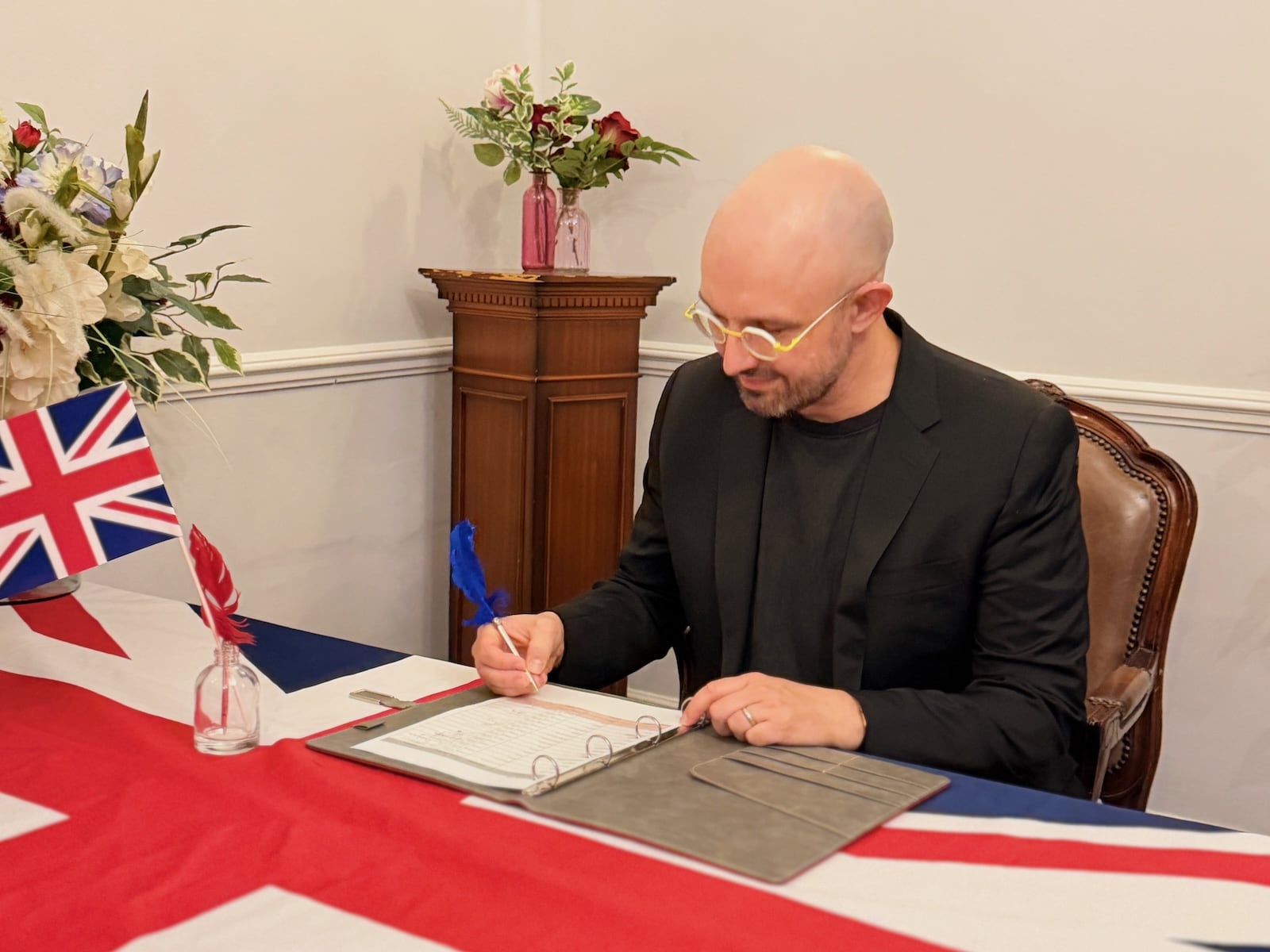
Overall, this was a pretty straightforward and streamlined process. The EU Settlement Scheme had just become available when we got married, and we pretty much rode that train to citizenship: we waited for settled status, then another year, then applied, and six months later we received the email notifying us of the favourable outcome.
I think the National Insurance Number system and the digital records tied to it played a major part in making this straightforward: we didn’t need to supply proof of employment, proof of tax payment, etc., as this was all already in the system. As a result, the application process was not complex, and only presented a couple of annoyances:
- We needed to submit scans of every page of our passports (even the empty ones). This took a while to put together.
- We needed to provide the dates of every trip we took in the last five years. It’s not like we travel much, but this was still a pain. Photo timestamps helped a lot here.
- And of course, the eye-watering cost of the application: £1700 per person!
Because we acquired our settled status through the EU Settlement Scheme, we also needed to pass the Life in the UK test before applying for citizenship.2 The test left a strange taste in my mouth: I found that thanks to growing up and going to school in France, I knew or could fairly reliably guess the answers to most questions. T., having grown up in Taiwan, did not have all this context, and getting a pass ended up being much harder for her. This hardly feels very fair, especially because the questions that were the most guessable for me were of the, shall we say, less-useful-to-know type, and it’s a bitter feeling to fail the test on a technicality. Overall, I understand why this test exists, but the format reminds me of the algorithm puzzle technical interviews some tech companies force on candidates: a fundamentally flawed way to measure something important.
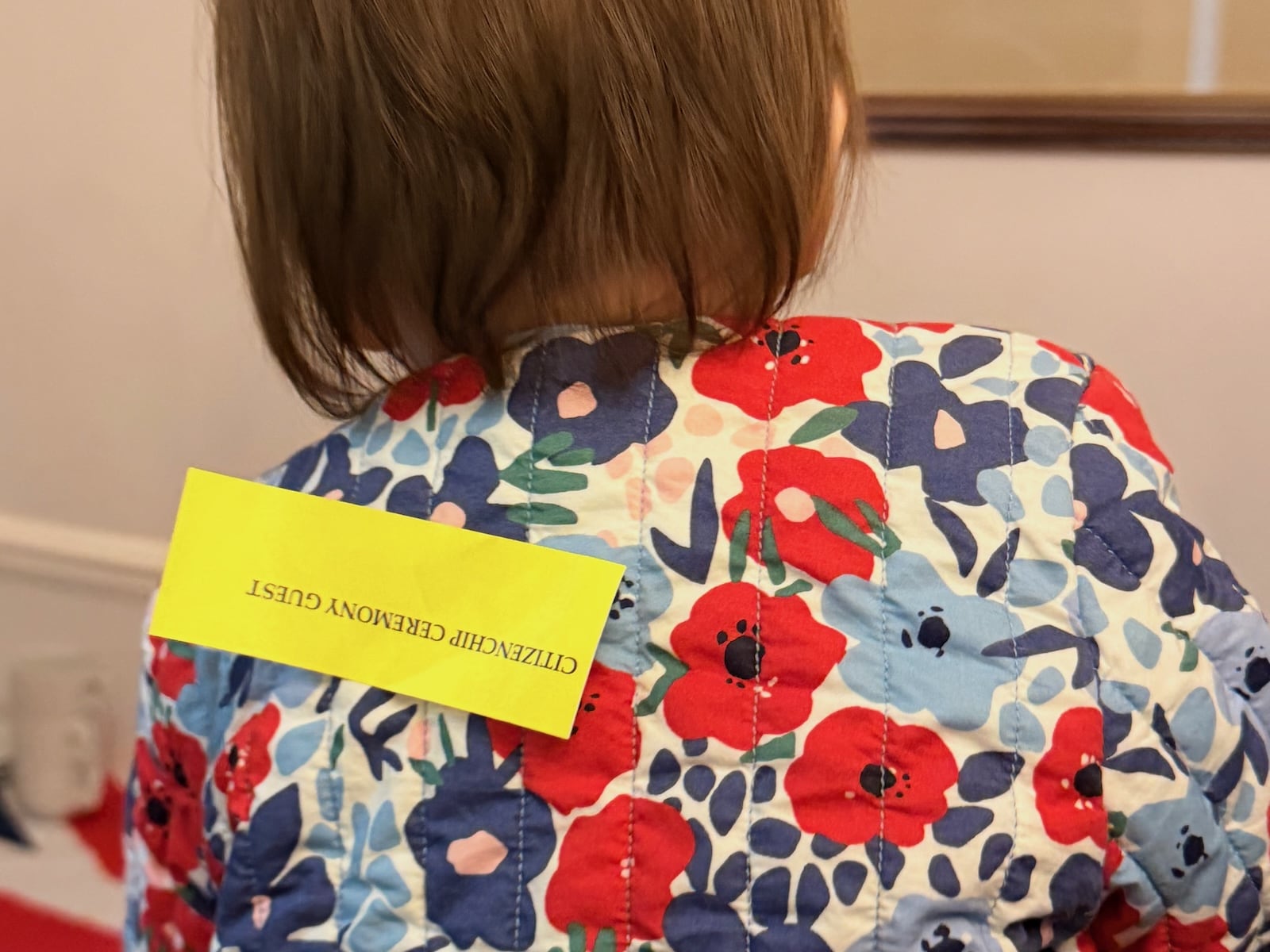
The ceremony itself, at our borough’s Register Office, was quite formal, but also felt like a happy occasion, with the officials making jokes and otherwise keeping things fun. We, as a group, recited the affirmations of allegiance in front of a portrait of the King, and, awkwardly3, sang God Save the King, then got selfies with the borough Mayor in her traditional civic regalia, and were on our way.
So now we’re British! The whole family: the two of us and the kids have, at last, a shared citizenship between all of us,4 so whenif shit goes down, we can all stick together; and as a nice bonus we get to vote and nudge the country in the direction our values point us.
As a third culture kid, there’s always been a tenuous connection between citizenship and belonging. Do I really belong in Britain? Does my family? As far as London is concerned, at least, I think the answer is yes, but I believe this was already the case before I became a citizen.
There are different approaches and attitudes towards naturalisation,5 but I think for us, what it comes down to is an additional layer of perceived safety for our family against potential future unhingedness of global politics. Which is not a bad thing to have at all!
-
Not quite the last step, actually: we still need to apply for British passports, at a cost of over £100/person. ↩
-
People who go the normal route need to pass this test before applying for Indefinite Leave to Remain. ↩
-
“Awkwardly” because it looked as though no-one knew the words. We certainly did not: the official ceremony guidance didn’t mention this part, so we did not prepare. ↩
-
The kids, having been born in the UK, are already citizens. ↩
-
For a great example, see Derek’s excellent post on becoming a citizen of Japan. ↩