I loved the MoMA

New York City
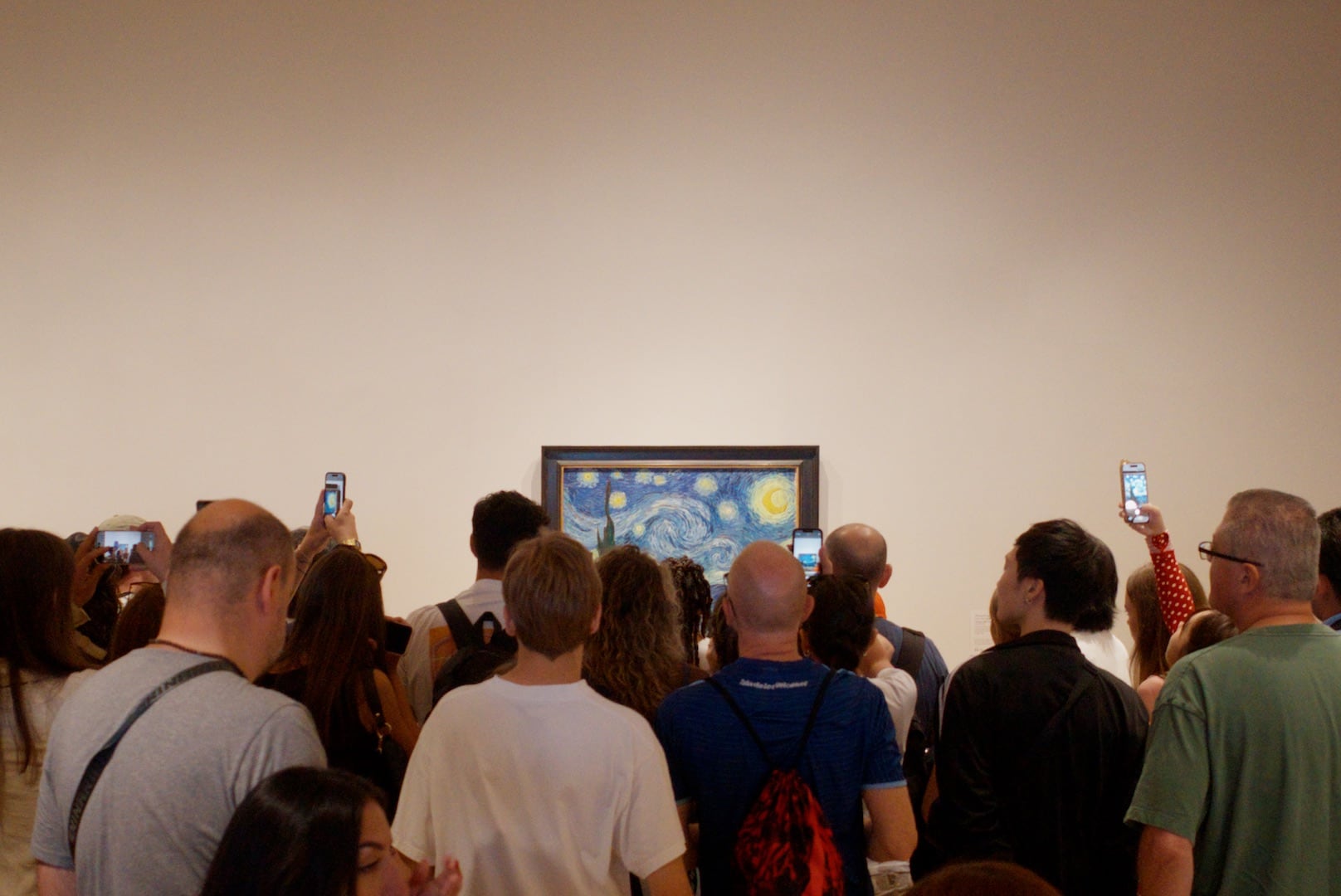
A photograph of a crowd of people in front of Van Gogh's 'Starry Night' at the Museum of Modern Art in New York City
VVG’s “Starry Night” IRL

I recently had the opportunity to visit the Museum of Modern Art in New York City.

As a long-time photographer (and a one-time photography student), the MoMA’s Photography department, once led by John Szarkowski, has been legendary: it’s thanks to this curator and this museum that we are now familiar with the greats of New York photography: Lee Friedlander, Diane Arbus, Garry Winogrand, all came to prominence thanks to “New Documents”, an exhibition Szarkowski curated at the MoMA in 1967; William Eggleston cemented colour photography as a legitimate art form with another Szarkowski-curated show in 1976.

Beyond these exhibitions (and those of the Szarkowski’s predecessor, Edward Steichen) and the associated writing, I was not familiar with this museum, until we had a chance to visit it on a trip to NYC this summer. We took a couple of hours, two small kids in tow, to do a brisk walk-through of the 5th floor, home to the museum’s permanent collection, and visited the cafeteria and the museum shop in the basement.

The space itself is impressive: nested in the heart of Manhattan’s hectic Midtown, a block off 5th Avenue, but huge and airy, with wide open spaces and a garden… stepping into the museum from West 53rd Street feels like entering a different world.
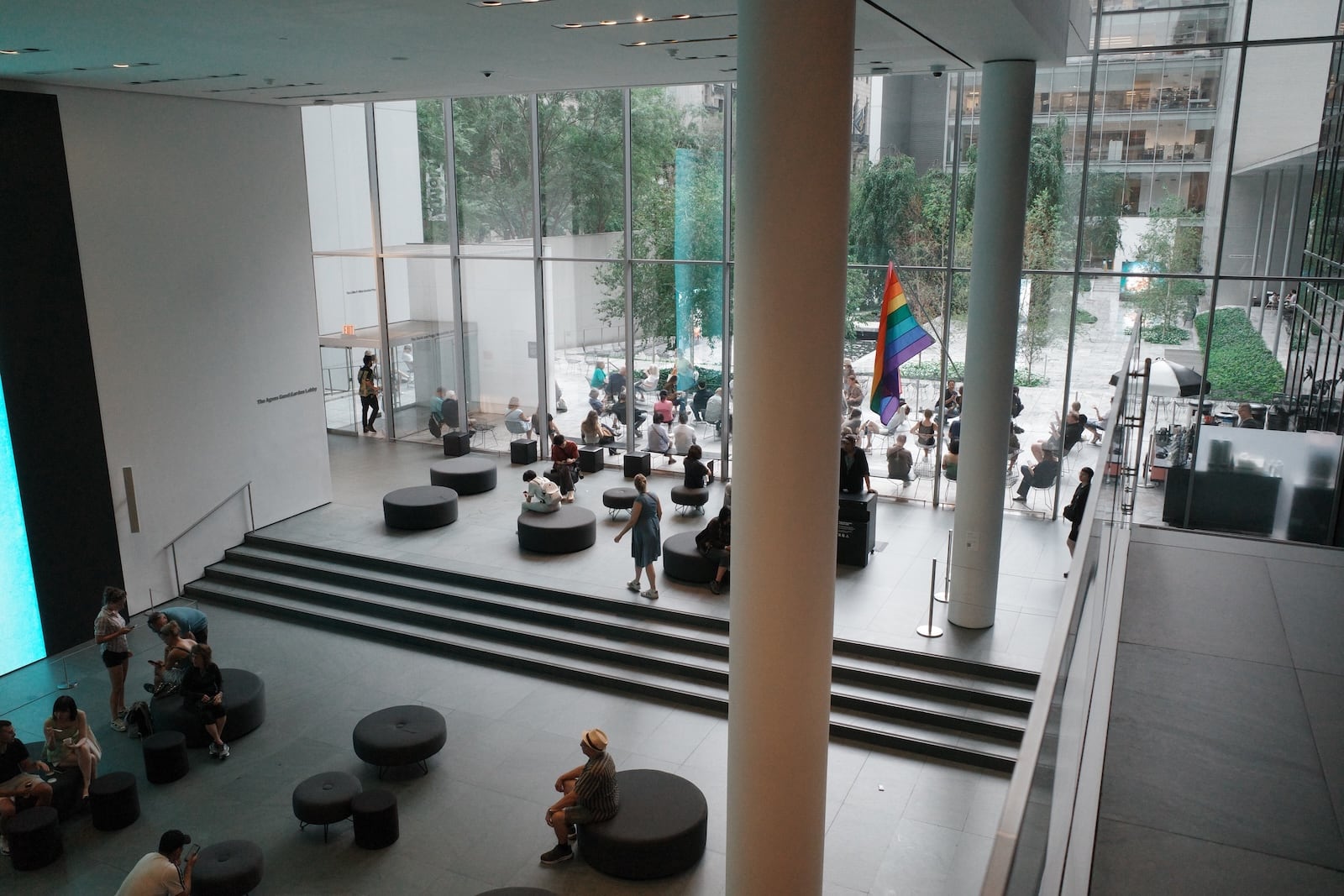
A photograph of an open space inside the MoMA, with people lounging on round seats. A tall, wide window separates the space from a courtyard, which includes more seating and some trees
Open space on the first floor

The art is, of course, incredible too. The centrepiece of the museum is Van Gogh’s “Starry Night”, which is so popular it’s impossible to get close to, but there are many, many other works that are no less breathtaking: works by Monet, Malevich, Matisse fill up my phone’s camera roll1.

Having been a parent for over four years now, the times where my partner and I could do something truly for ourselves are few and far in between, and walking through these spaces, looking at the works (trying to be with them, to the extent possible) reminded me that I also have parts of me that are really into this kind of thing, who thrive on taking the time and trying to really look.

It was an exhilarating feeling! Part way through our visit, I turned to my partner and told her that when the kids are a bit bigger, I’d love to come back, just the two of us, and spend the whole day wandering the museum. And so it shall be.
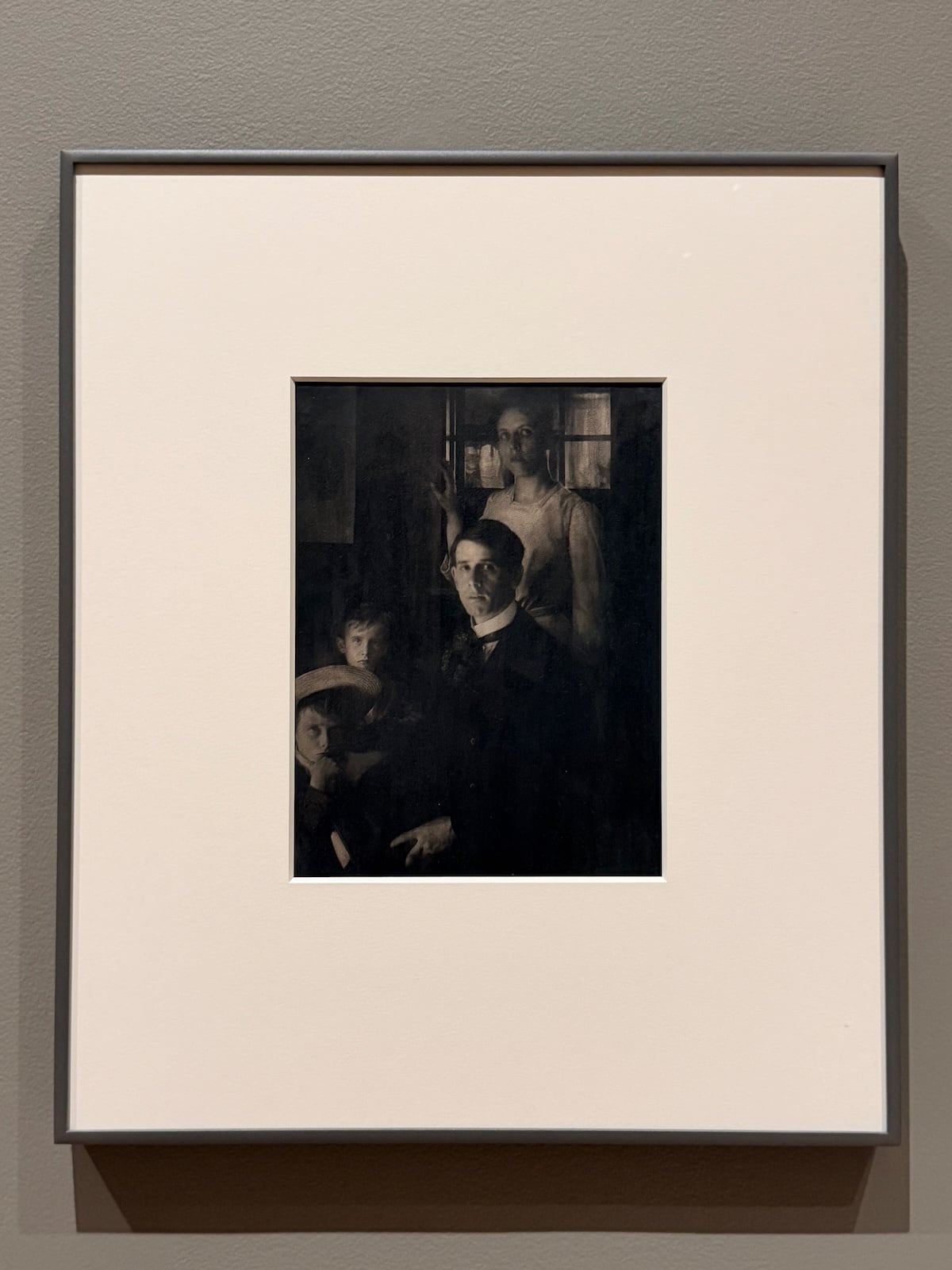
A photograph of a framed, dark-toned early 20th century photographic print showing a family: a man in a dark suit seated in the centre, a woman standing behind him by a window, and two children in straw hats in the foreground
Gertrude Käsebier’s portrait of photographer Clarence H. White and his family (1908)
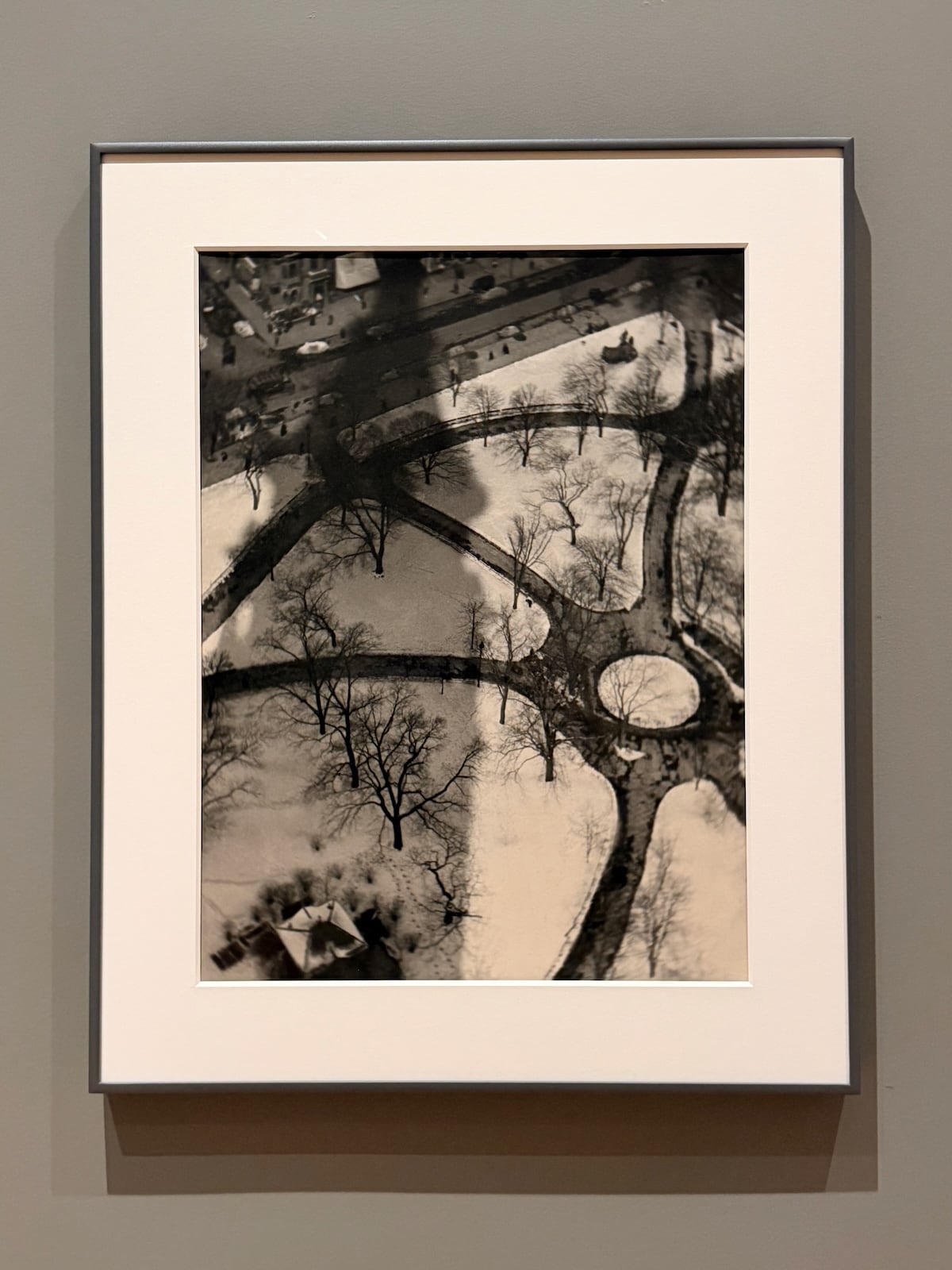
A photograph of a framed black and white photograph taken from high above a snow-covered park, showing dark, curving paths and bare trees radiating out from a central circle, with the long shadow of a tall building falling across the snow
Alvin Langdon Coburn’s “The Octopus” (1912), Madison Square Park seen from above
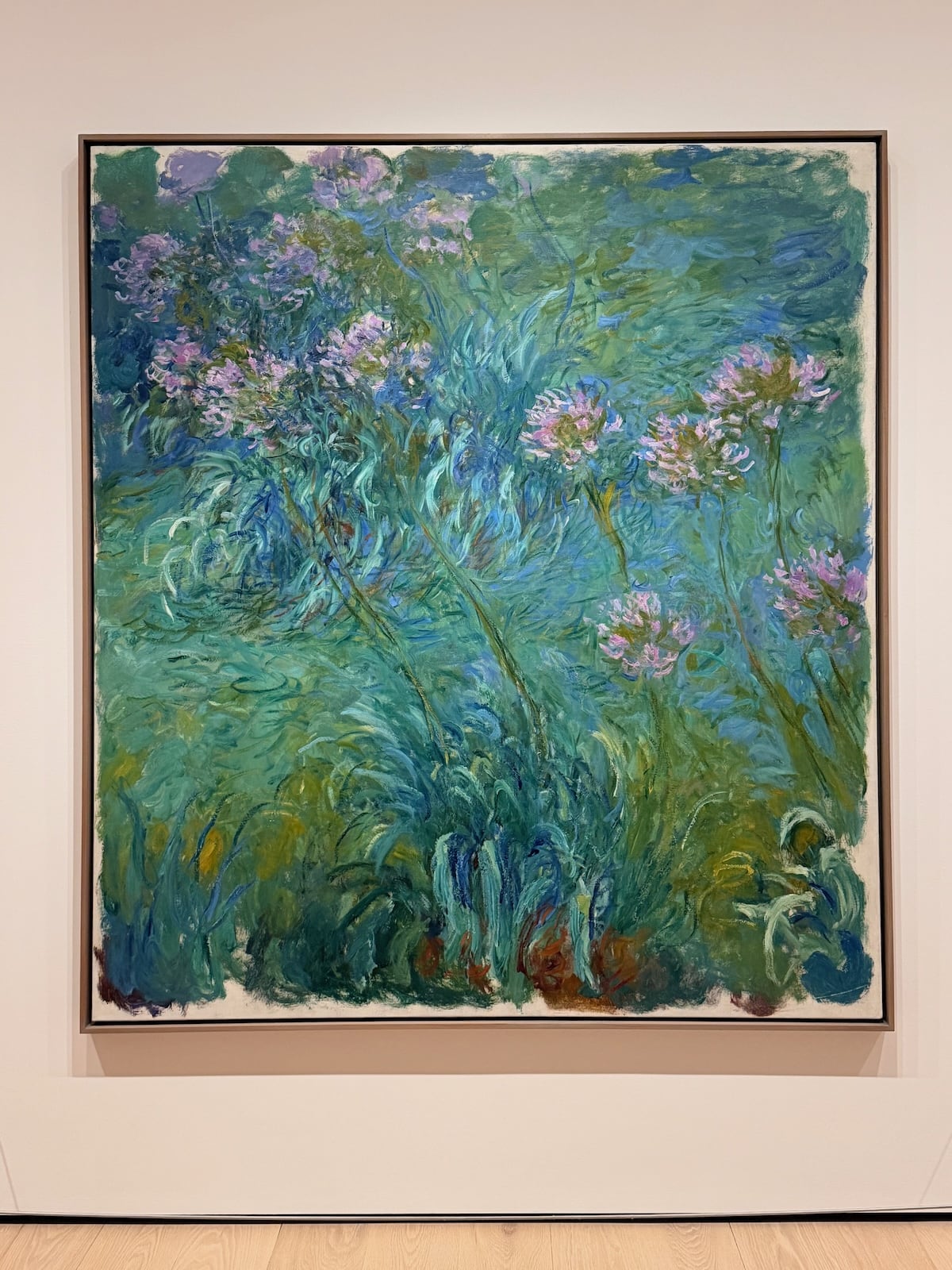
A photograph of a large square painting by Monet of agapanthus flowers: clusters of pale purple blooms on tall stems over a swirling mass of green and blue brushstrokes
Monet’s “Agapanthus” (1914–26)
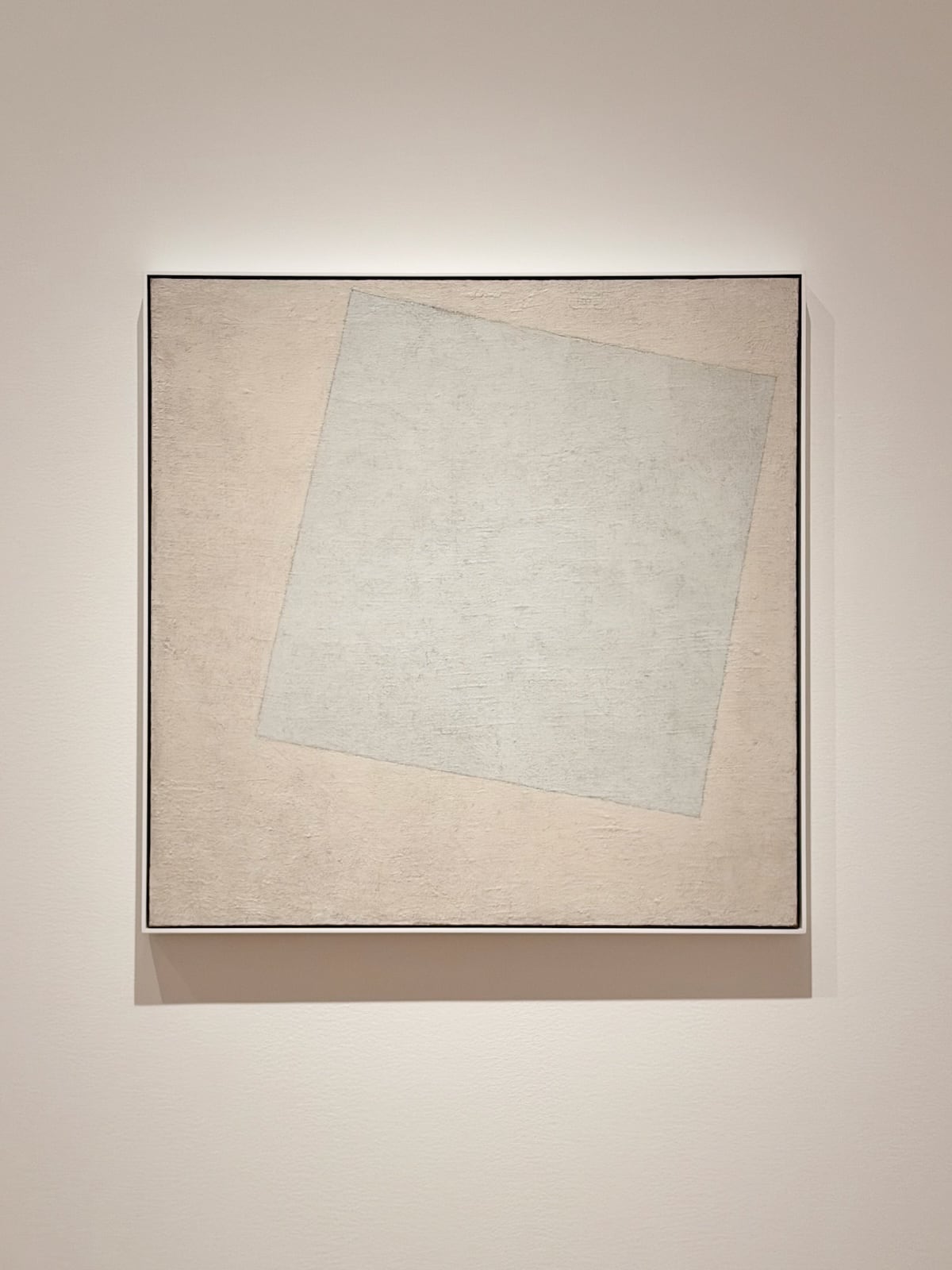
A photograph of a square painting on a beige wall: a tilted off-white square on a slightly warmer white background, with visible brushstrokes and cracking in the paint
Malevich’s “Suprematist Composition: White on White” (1918)
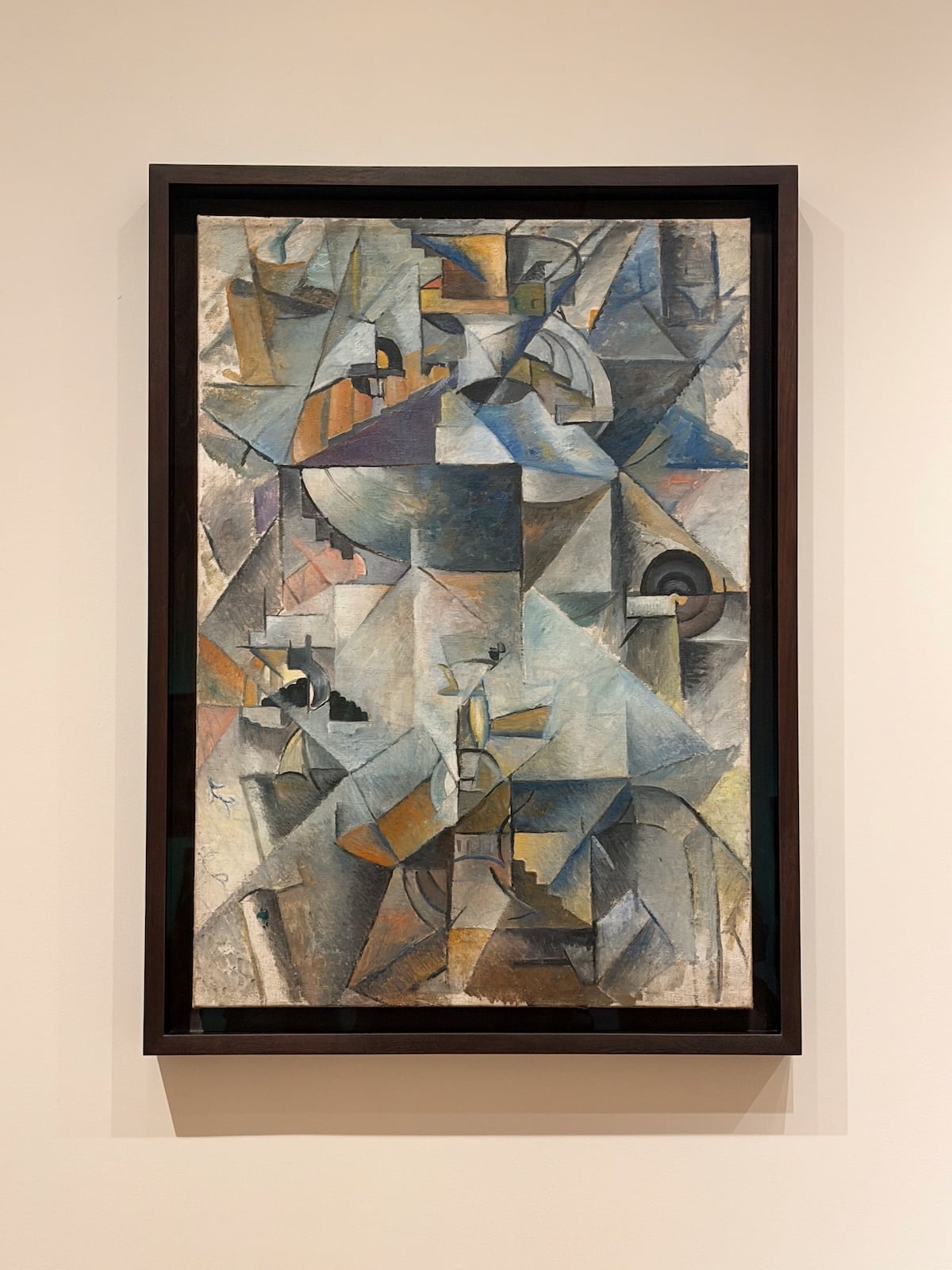
A photograph of a cubist painting in a dark wooden frame: fragmented grey, blue, ochre and white planes, with the rounded shape of a samovar and its spout discernible in the centre
Malevich’s “Samovar” (1913)
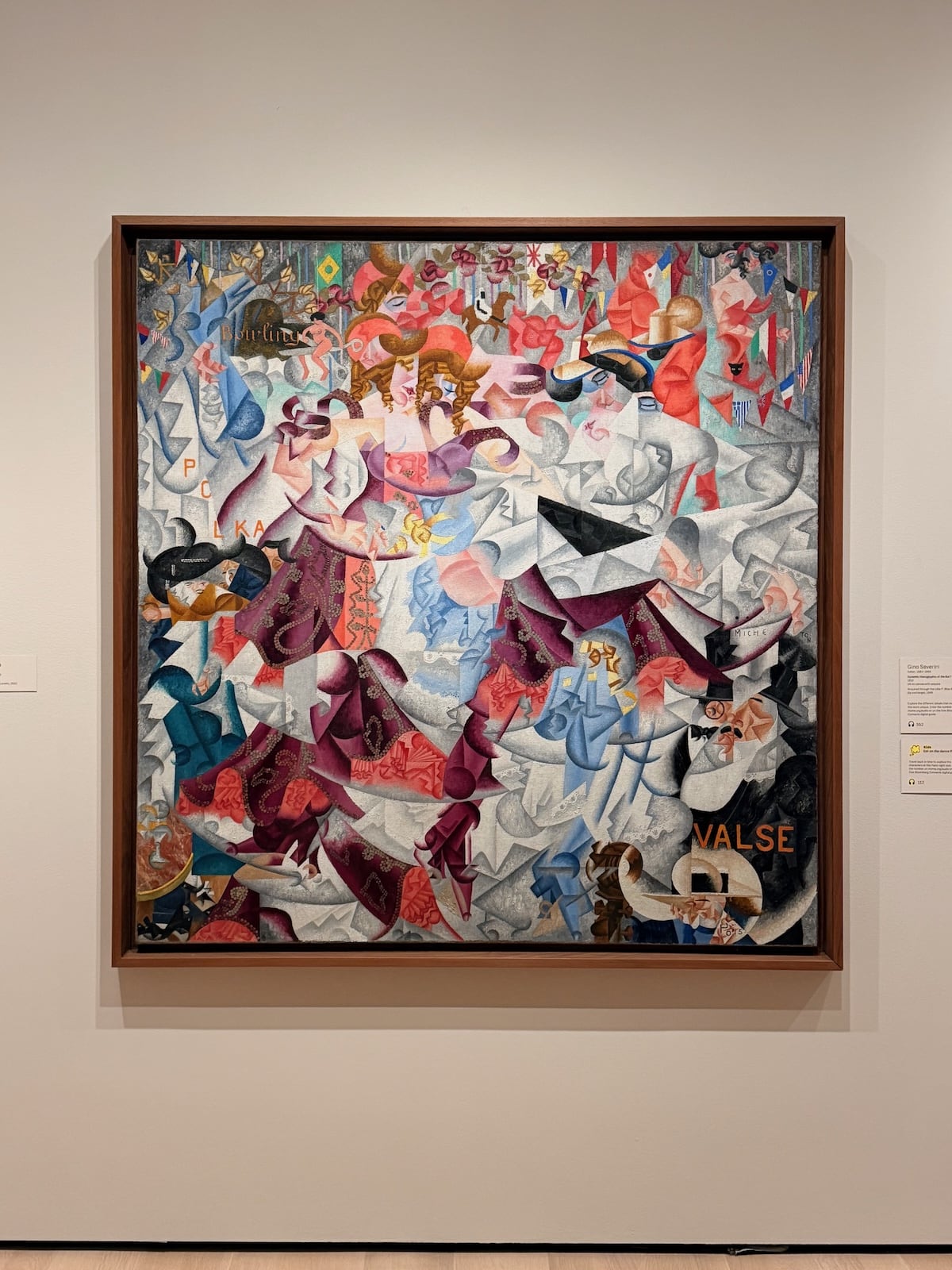
A photograph of a large, colourful futurist painting of dancers in a Paris cabaret: fragmented swirling figures in purple, red and blue dresses, with the words ‘POLKA’ and ‘VALSE’ painted in among the shapes
Gino Severini’s “Dynamic Hieroglyphic of the Bal Tabarin” (1912)
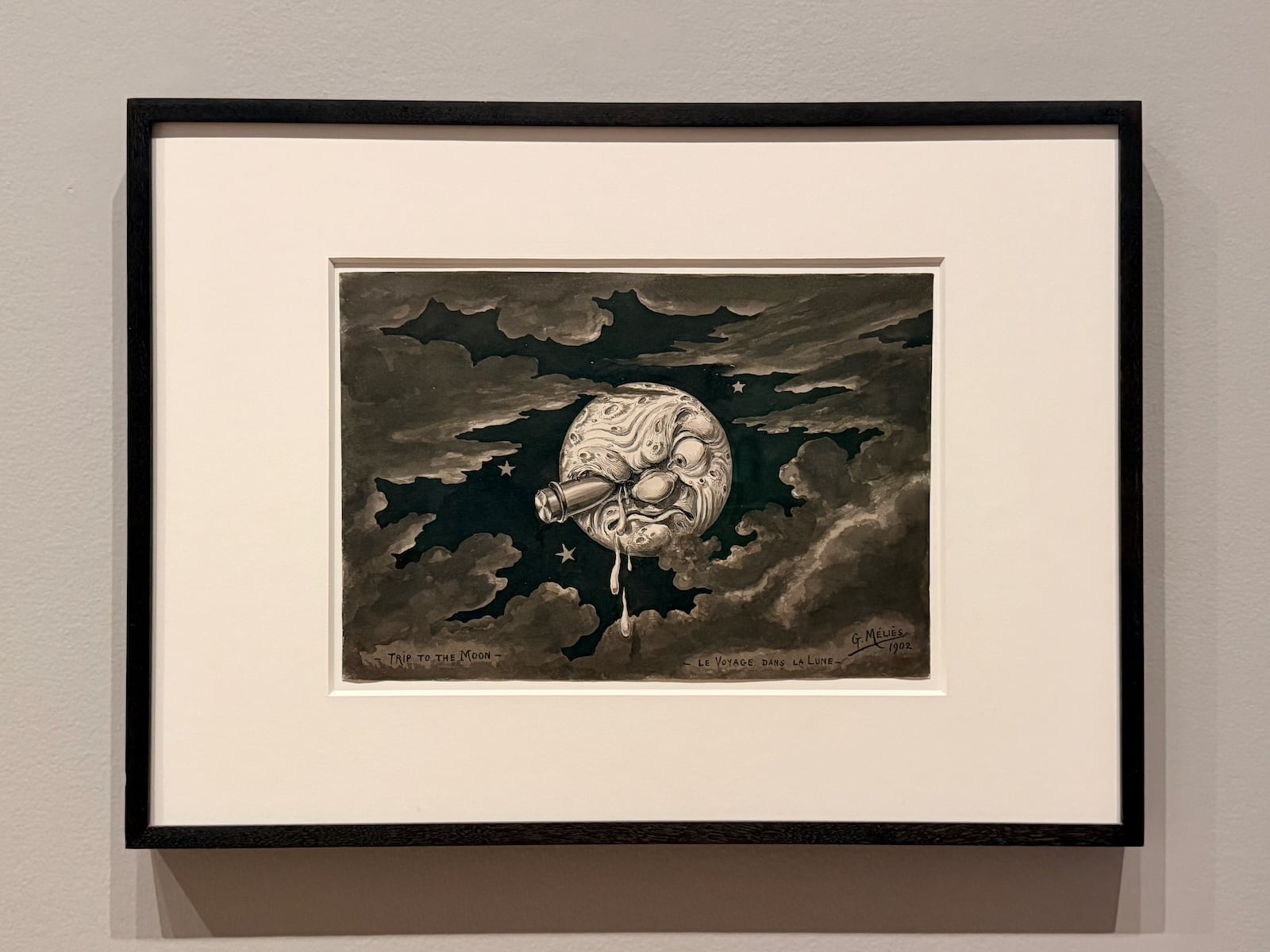
A photograph of a framed ink drawing of the moon with a grimacing human face and a rocket lodged in its eye, surrounded by dark clouds and stars, captioned ‘Trip to the Moon’ and ‘Le Voyage dans la Lune’ and signed G. Méliès 1902
Georges Méliès’ drawing for “A Trip to the Moon” (1902)
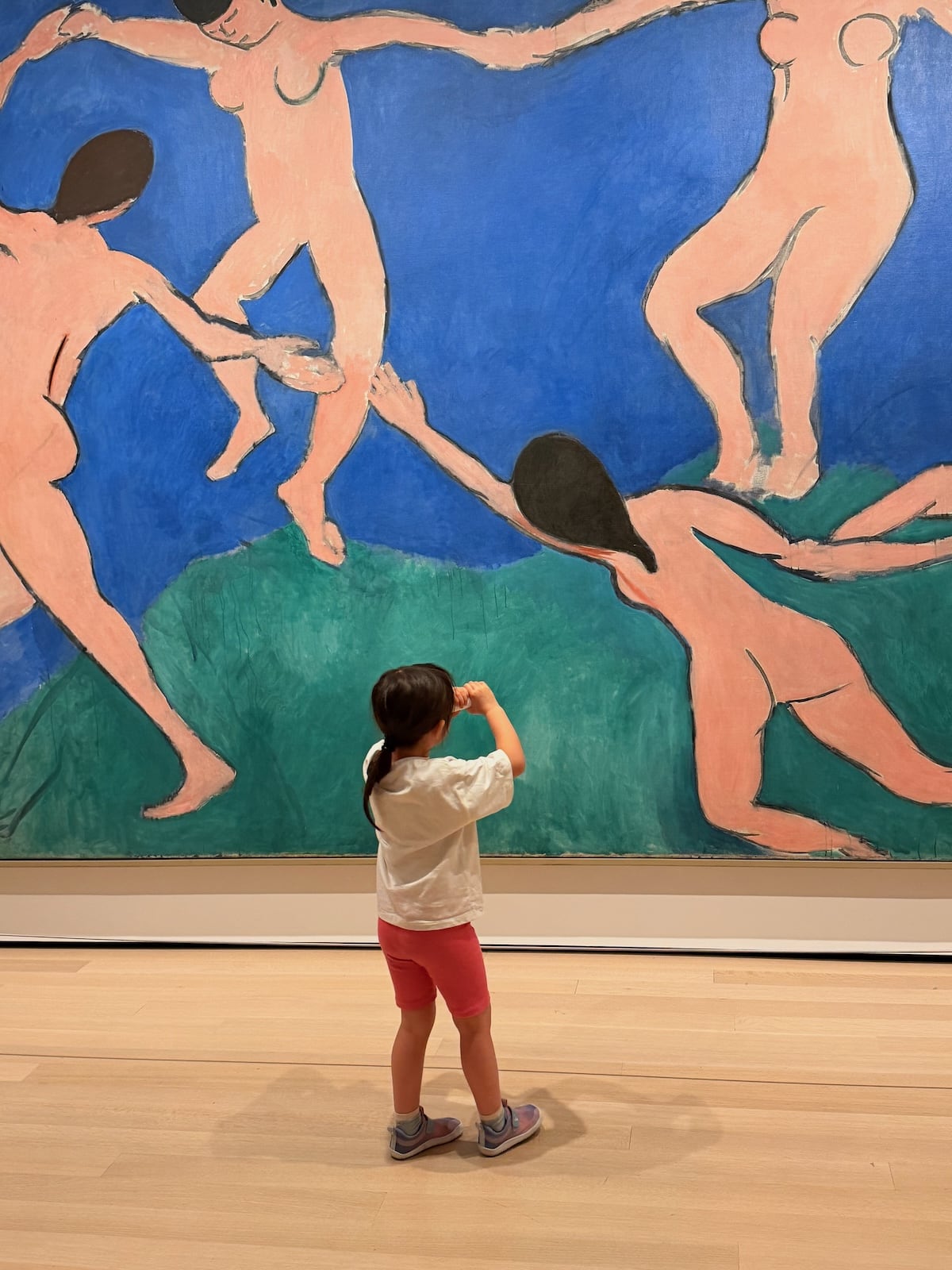
A photograph of a small child with a ponytail, in a white t-shirt and pink shorts, standing with a hand raised to her face in front of Matisse's huge painting 'Dance (I)', showing five pink figures dancing in a circle on a green hill against a blue sky
Our eldest taking in Matisse’s “Dance (I)” (1909)
  1. Wait a sec… Did I inadvertently spend most of my time in the “M” section?